3 Must-Read Books For Artists To Inspire Your Creativity
"The best artists tend to be the ones with the most sensitive antennae to draw in the energy resonating at a particular moment. Many great artists first develop sensitive antennae not to create art but to protect themselves. They feel everything more deeply."

Decaf Journal is reader-supported. When you buy links through our site, we may earn an affiliate commission. We've partnered specifically with Bookshop.org because every purchase on their site financially supports independent bookstores.
It's a disheartening time to be an artist, and a lot of us (myself included) are struggling. While distributing your artwork has never been easier thanks to the internet, society's collective attention span is merely a fraction of what it was once was, along with new digital gatekeepers intentionally limiting organic reach in the realm of social media and even traditional search engines. Add the spectre of generative AI replacing creativity entirely into the mix and suddenly the idea of embarking on any artistic pursuit makes very little sense; at least on paper anyway.
I'm ashamed to admit that I wasn't an avid book reader until about a year ago, when difficult life circumstances compelled me to seek solace in some of the great fiction books of the 20th century such as The Lord Of The Rings trilogy and The Great Gatsby. These novels have rejuvenated me in a profound way that I didn't expect, and I'm now convinced that books are the greatest storytelling device (yes, even more than cinema) that we have available to us. But my newfound love of literature didn't end with epic paperbacks.
I've also started looking to non-fiction books in order to completely immerse myself in a topic that I'm interested in learning more about, and this educational journey has been nothing short of transformative. When reading a book, your mind is actively learning rather than being simply being exposed to content, and this subtle but important distinction will actually make you smarter the more you engage in this practice.
I've been reading the following three books for various reasons that I'll get into below, and in doing so I've become a student of the authors' work by getting a deep dive into their brilliant minds that has stuck with me long afterwards. The experience has fundamentally changed my outlook on the world, and for the better. So here are three hope-inspiring books that I wholeheartedly recommend to every artist, regardless of your chosen medium.
Record producer Rick Rubin is a living legend in the music industry, having worked with icons such as the Red Hot Chilli Peppers, Johnny Cash, Eminem, Lady Gaga, Adele, Metallica, Shakira, and Justin Timberlake among countless others. He's renowned for his unique ability to help the top musical artists in the world get out of their own way and let their creativity flow unhindered.
It might seem like somewhat of a contradiction then, to know he freely admits that he doesn't have much technical expertise in regards to his craft. This should give all of us pause and seriously contemplate what real value he's actually bringing to the table. If he isn't proficient in the tools of the trade, why are the most talented musicians working with him year after year?
"To live as an artist is a way of being in the world."
I'd been interested in reading The Creative Act, but my expectations were dampened after seeing several reviews declaring that the book was essentially intended for non-creative people to feel like they too can be "artists". So when I did finally pick it up on a whim at my local bookstore (the beautiful printing is hard to resist), I really wasn't expecting much. Thankfully, those pessimistic reviews couldn't be further from the mark.
In a nutshell, this book teaches practical tips on how to become more sensitive to the endless inspiration that surrounds us, to moments of epiphany, and how to harness them effectively in real time. Rubin explains the concept of ideas that are revealed to us in daily life which he refers to as The Source.
By practicing active awareness and quieting distractions, we can become more in tune with the subtle clues that the universe provides and that what might at first seem like only a coincidence may in fact be a subliminal guiding force that others will likely miss. These are the signs that we need to be paying close attention to.
"The best artists tend to be the ones with the most sensitive antennae to draw in the energy resonating at a particular moment. Many great artists first develop sensitive antennae not to create art but to protect themselves. They feel everything more deeply."
The Creative Act asks us to reclaim our childlike wonder and curiosity of the world, as your own excitement is an indicator that a creative idea should be explored further. Rubin frequently stresses the importance of being connected to nature along with the endless inspiration that comes from it; the colors, sounds, smells, and sights of our natural environment. He also provides thoughtful suggestions on where to find source material, what inputs to include in your life (great books) as well as what to limit (doomscrolling the news), and tips on how to structure your daily habits in a way that feeds your creative work.
One of the most beautiful pieces of advice Rick Rubin provides in the book is that it's our humanity that makes art interesting. Imperfections could be what make the work great and he believes we need to learn to embrace them. Look no further than the Leaning Tower of Pisa or Japanese Kintsugi which are noteworthy precisely because of their so-called flaws.
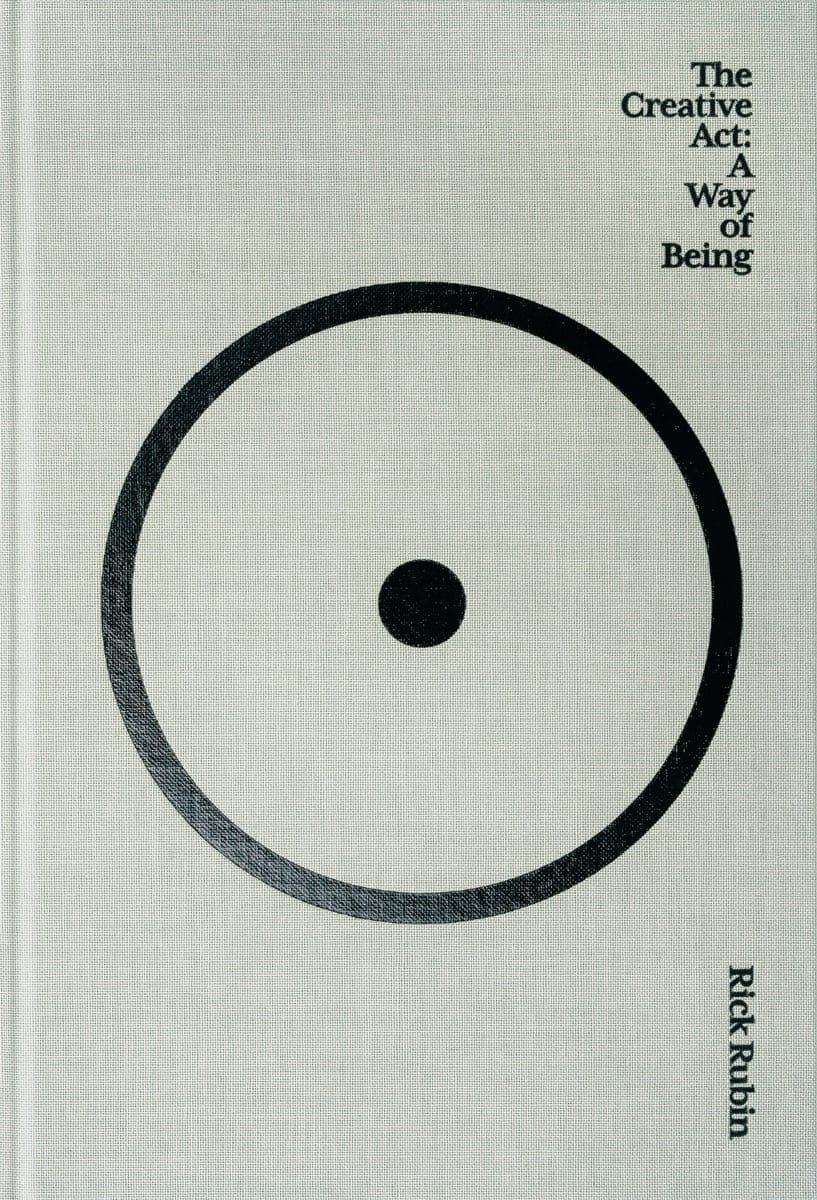
My favorite takeaway is when Rick Rubin explains how to not overthink the creative process; to resist imposing limitations on ourselves and be open to different ways of doing things, even if following a specific formula has worked well in the past. He rightly notes that when working with musicians, they're attempting to tap into their subconscious and testing variations of their ideas even if they don't fully understand them in the moment. We can't control the creative process, but we can take note of it.
"Active play and experimentation until we're happily surprised is how the best work reveals itself."
With The Creative Act, Rubin posits that creativity isn’t bound by technical proficiency or certain tools, rather it’s a way of living your life. This book is a modern classic that offers a refreshing perspective on how to identify creative breakthroughs and I'm of the opinion that it's nothing less than an essential read for all creatives.
Thinking Like a Human: The Power of Your Mind in the Age of AI
By David Weitzner
Buy On Bookshop.orgI wasn't looking for the antithesis to Silicon Valley's attempts at steamrolling artistic expression with their aggressive deployment of generative AI tools when I first stumbled upon the work of David Weitzner in an interview with The Tyee. But that's exactly what I found as his well-reasoned arguments gave me the very hope that I desperately needed to hear. Weitzner is an associate professor of management at York University in Toronto, he writes the Managing with Meaning blog for Psychology Today, and more recently he's the author of Thinking Like a Human: The Power of Your Mind in the Age of AI; a book that systematically pokes holes into the widespread narrative that the outsourcing of human creativity to artificial intelligence is an imminent reality that we must all accept or be left behind.
"The promise of automation was to do the mundane so human creativity can flourish. Instead, human creativity is demeaned as mundane so Big Tech's machines can flourish."
In the book, Weitzner effectively breaks down what an algorithm actually is in layman's terms for the reader and it's an incredibly helpful insight to know what we're up against. He pulls back the veil into what's truly going on behind the scenes within the tech industry and how the promise of large language models' godlike intelligence simply doesn't stack up to reality. By clearly pointing out AI's (often ridiculous) shortcomings, Weitzner makes a strong case complete with countless citations to back up his assertions that human intelligence is in fact the superior tool.
He also provides a razor sharp comparison of those responsible for the 2008 global financial crisis with the reckless plans of tech companies today, which he eloquently refers to as their "five-step hustle". At the same time, Weitzner does a great job of holding the tech industry accountable while rightfully discerning their statements about the risks of stifling innovation as really just a license to kill the vital copyright protections that artists across all creative industries rely on.
At the core of this ideology is the antihuman belief that a group of technological products, designed by a small technical elite, "can and should become autonomous from and eventually replace, rather than complement, not just individual humans but much of humanity."
Thinking Like a Human makes the argument for artful intelligence, which is the process of relying on our minds, bodies, actions, experiences, and environments as ammunition for generating true creative inspiration. Weitzner asserts that the body holds equal importance as the mind in terms of intelligence, and that physically interacting with one's environment is critical to understanding. A prime example of this is our ability to reach out and grab an object in front of us in order to better comprehend our three dimensional reality.
We can therefore use the uniquely human traits available to us to think more effectively and creatively in ways that robots simply aren't capable of. We truly learn by doing things in the real physical world, and through this process we're also able to figure out when to break the rules in order to push innovation further into unexpected territory. His research-backed example of why having AI replace radiologists is absurd (Chapter 8, Unhealthy Fixations), perfectly demonstrating why human creativity interfacing in the physical world is essential, and cannot be outsourced to a machine without dangerous consequences.
"It is nothing less than bad science to describe human cognition as a process taking place exclusively in the brain. AI built on a neural net model, where data is processed in hardware that uses interconnected neurons in a layered structure, is claimed to possess architecture that resembles that of the human brain. But that's not how the human brain works, nor is the brain the sole site of thinking."
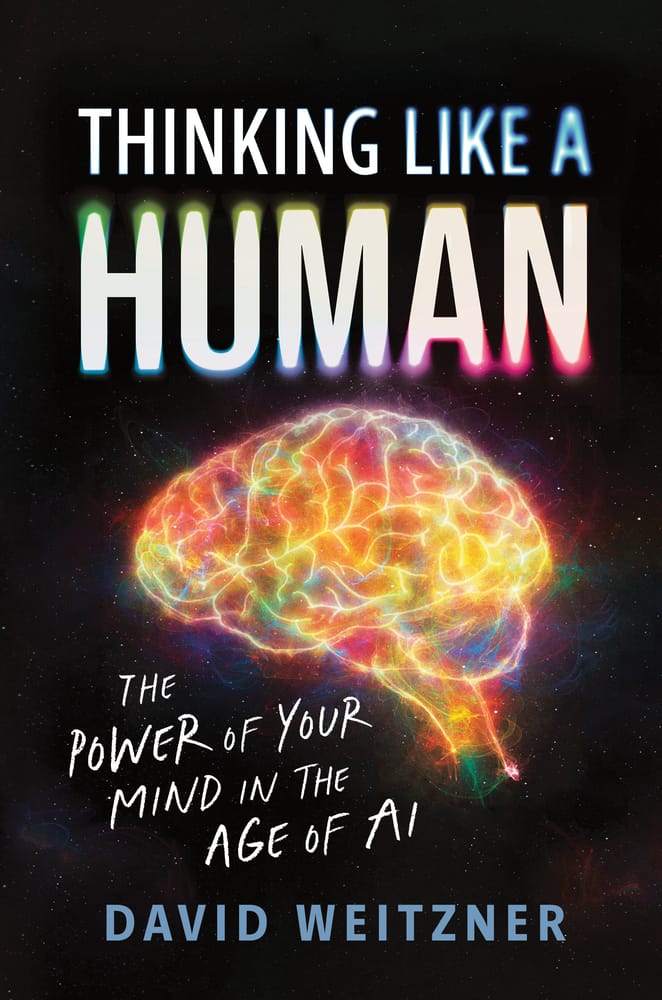
If being relentlessly bombarded by AI news is making you depressed, you'll feel more hopeful after reading this book. Thinking Like a Human is not only well researched and informative, it's also entertaining and often funny thanks to Weitzner's compelling writing style. He offers an empowering message of human intelligence that reminds us not to dread the future, along with actionable advice to ensure that we remain the irreplaceable vessel for creativity.
For me, reading Thinking Like a Human has been somewhat akin to Neo waking up from the Matrix, to see the world as it truly is, not how the tech industry and its beneficiaries want you to see it. David Weitzner shows us just how deep the rabbit hole goes, all without deviating into conspiracy theory territory.
"Art is created by embodied beings as a method of transcending the limitations of their bodies, with the intention of impacting the sensations of other embodied folks. It is thinking by doing, in particular environments, that transcends the creative medium being employed (be it music, words, images, or movements) to inspire other actions, by other people, and reach into their environments. Art is intentional, a choice to communicate and explain an inner truth for which words or tools of rational persuasion prove absolutely insufficient."
In my mind, Sir Roger Deakins needs no introduction but I realize that not everyone is obsessed with his work like I am, so I'll give one anyway. He's easily one of the top three directors of photography in cinema alive today with multiple Oscar wins to his name. His filmography includes Blade Runner 2049, Shawshank Redemption, No Country For Old Men, Skyfall, 1917, The Assassination of Jesse James, Sicario, and countless other unforgettable masterpieces.
I often find that his cinematography is difficult to put into words. It's visually stunning, often unexpected (the water reflections on the walls in Blade Runner 2049 are a prime example), but more importantly his work always serves the story first and foremost. He doesn't seem interested in using his impressive lighting abilities just for show and the films are better for it. Instead, the lighting is always motivated by real life or the world that the characters within the story are inhabiting.
With that said, Byways is not at all what I was expecting. In fact, I was even a little bit let down initially on my first pass through the pages. The photographs Deakins has included in the book are much quieter than the awe-inspiring professional work that he's become known for in Hollywood movies. However, after revisiting the book I've found it to be a fantastic collection of black & white film photographs to look through on a dreary day when you're looking for a calming visual escape.
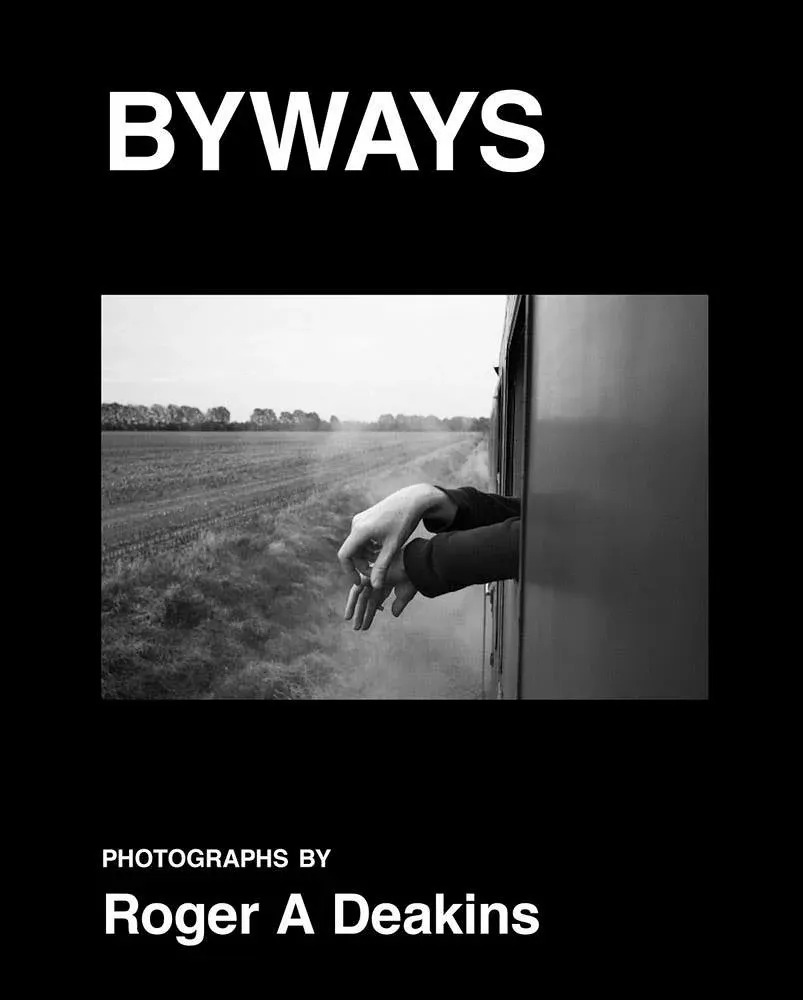
In the opening pages, Deakins provides a brief overview of how he came into cinema, his love affair with photography, and why these images are personally meaningful to him. Although he states upfront that he doesn't consider himself a photographer and there aren't a ton of standout individual images, the work as a whole tells a beautiful cohesive story.
While Deakins has included several fascinating off-duty images that he shot on location while working on his films, it isn't the bulk of what you'll find in this book. I particularly enjoy his meditative photographs of the quaint 1970s English countryside which include candid moments of daily life, farmers, landscapes, and culture from a simpler time long passed. Byways is primarily a coffee table photo book with few words, but I find its unpolished documentary images of humanity comforting for the soul nonetheless.