A Review Of The Zhiyun Molus X100 RGB Light
I freely admit that I'm normally quite methodical and formulaic with my lighting setups. I like what I like, and tend to stick with what works. But using this light has been incredibly freeing and encouraged me to push well past my comfort zone.
Decaf Journal is reader-supported. When you buy links through our site, we may earn an affiliate commission.
Lately I've been finding myself contemplating the concept of cinema. More specifically, what makes an image, be it a still frame or the illusion of motion when projected at 24 frames per second, cinematic. The Merriam-Webster dictionary defines the term as, "the art, technique, or business of making movies : the motion-picture medium or industry". This is a good jumping off point, but let's consider the essential elements that are needed as well. Perhaps cinematic images include motivated light sources that ground the environment in realism, color theory that provokes a certain mood, or a composition that implicitly tells a story within the frame.
Zhiyun recently approached me to ask if I'd be interested in trying out their Molus X100 RGB Light, which is a constant light source that can be used for both photo and video applications. The fact that Zhiyun explicitly stated upfront that there were no expectations for a positive review or specific talking points from me is both noteworthy and commendable. With this being primarily a video light, I thought it would be an interesting exercise to put my aforementioned pondering into practice by using it to create a set of cinematic still images. Without giving away too much up front, as someone who usually only uses strobes / flashes in a studio environment, I'll say that shooting with a constant light source created some unique technical challenges as well as a few exciting creative opportunities for still photography.
But before we get to that, let's take a closer look at the features that this light has to offer.
Build Quality & Design
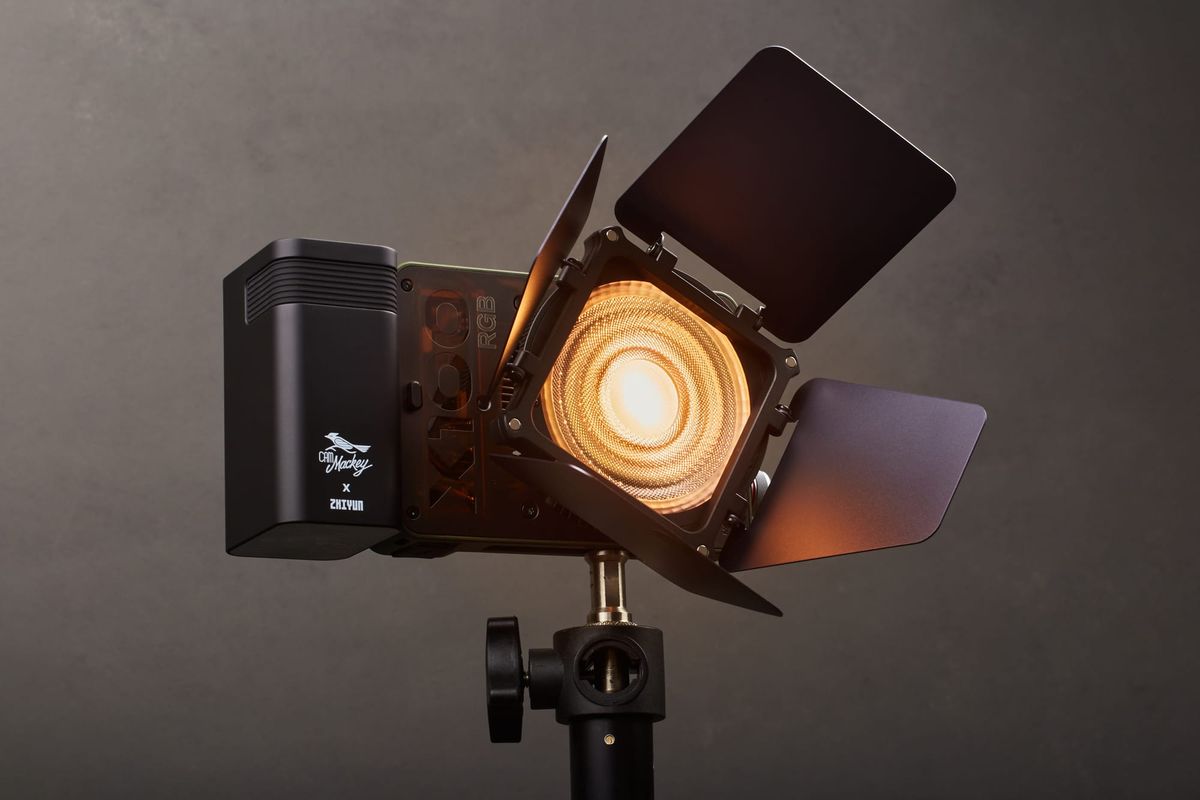
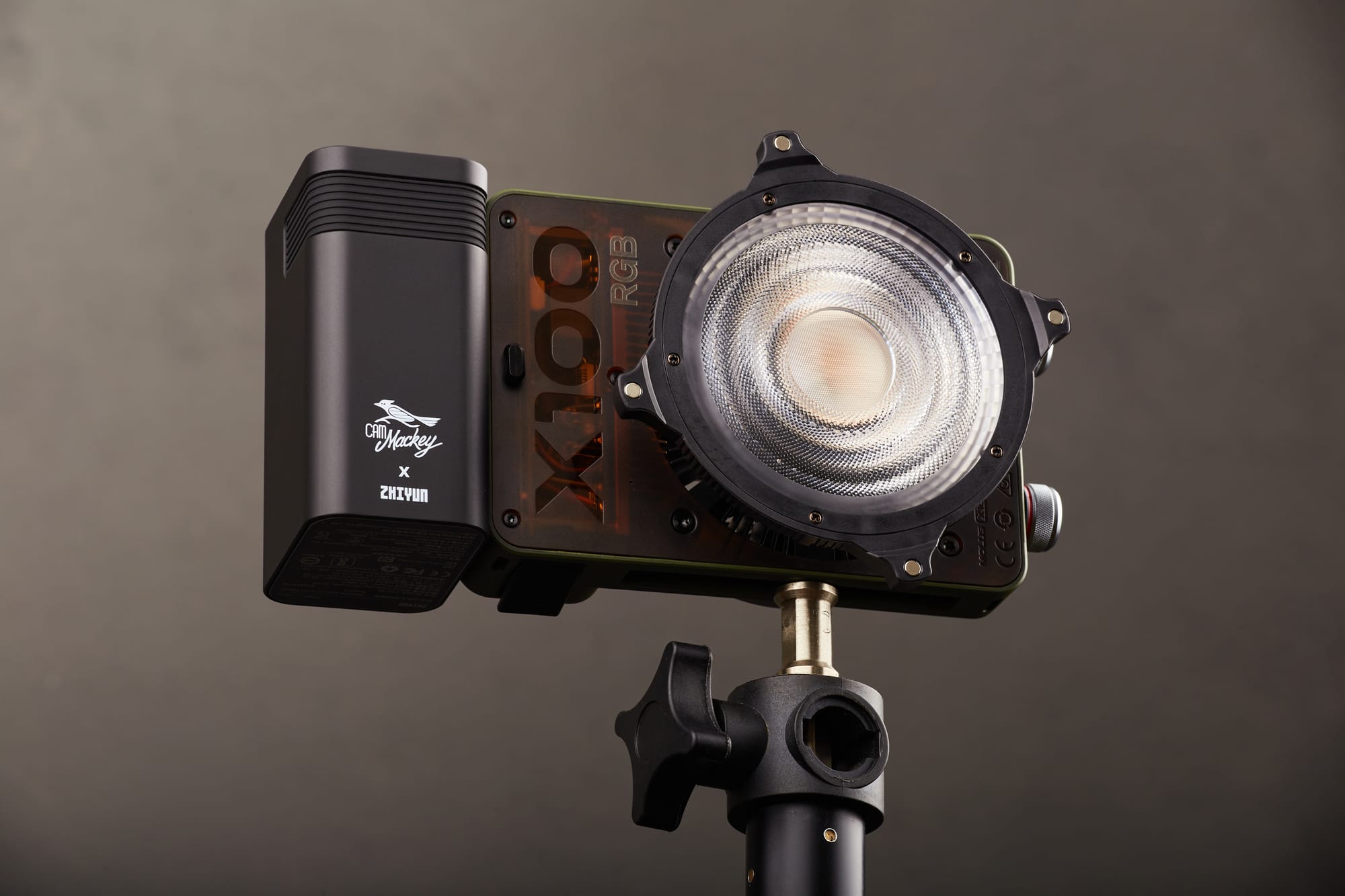
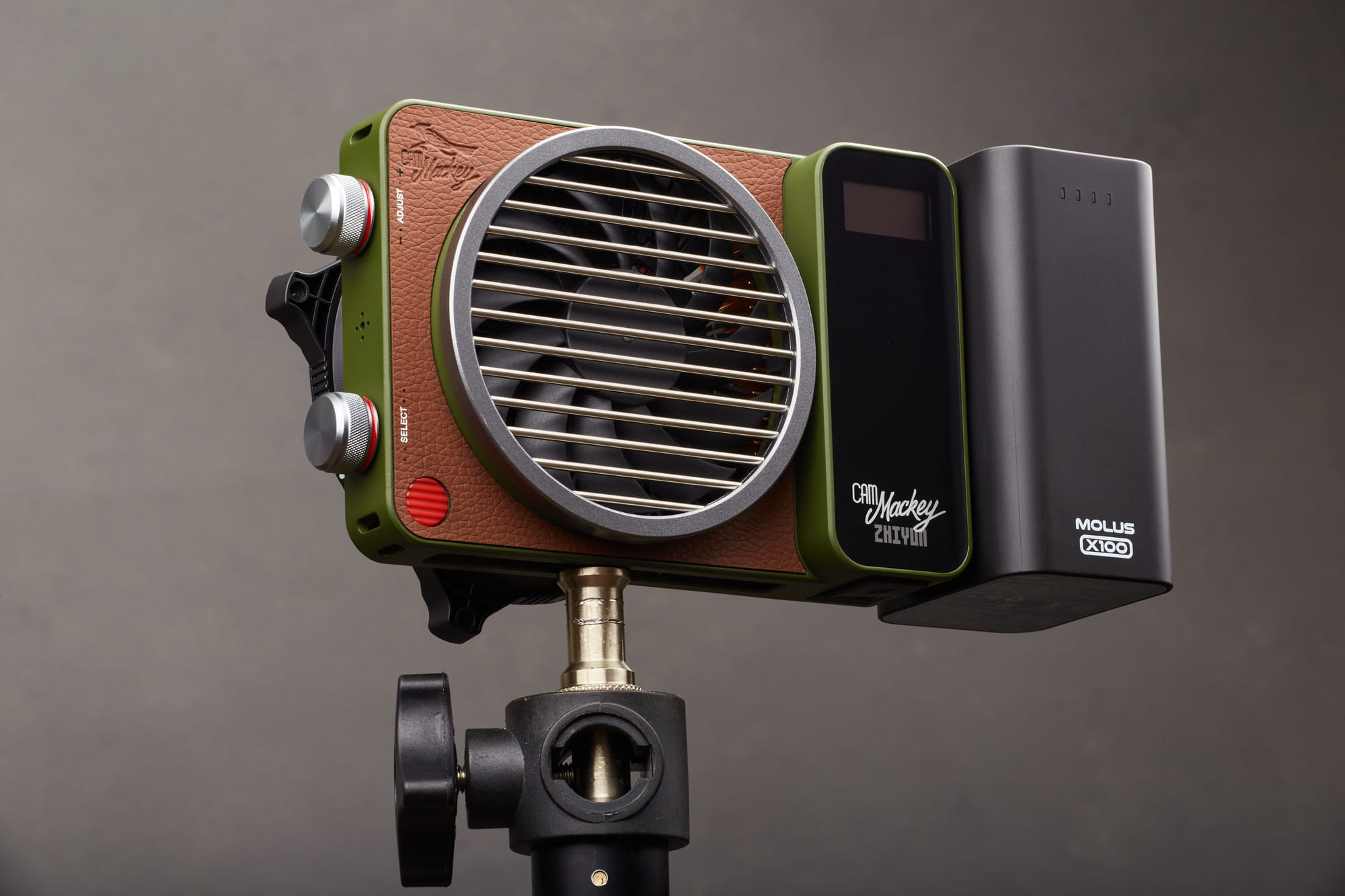
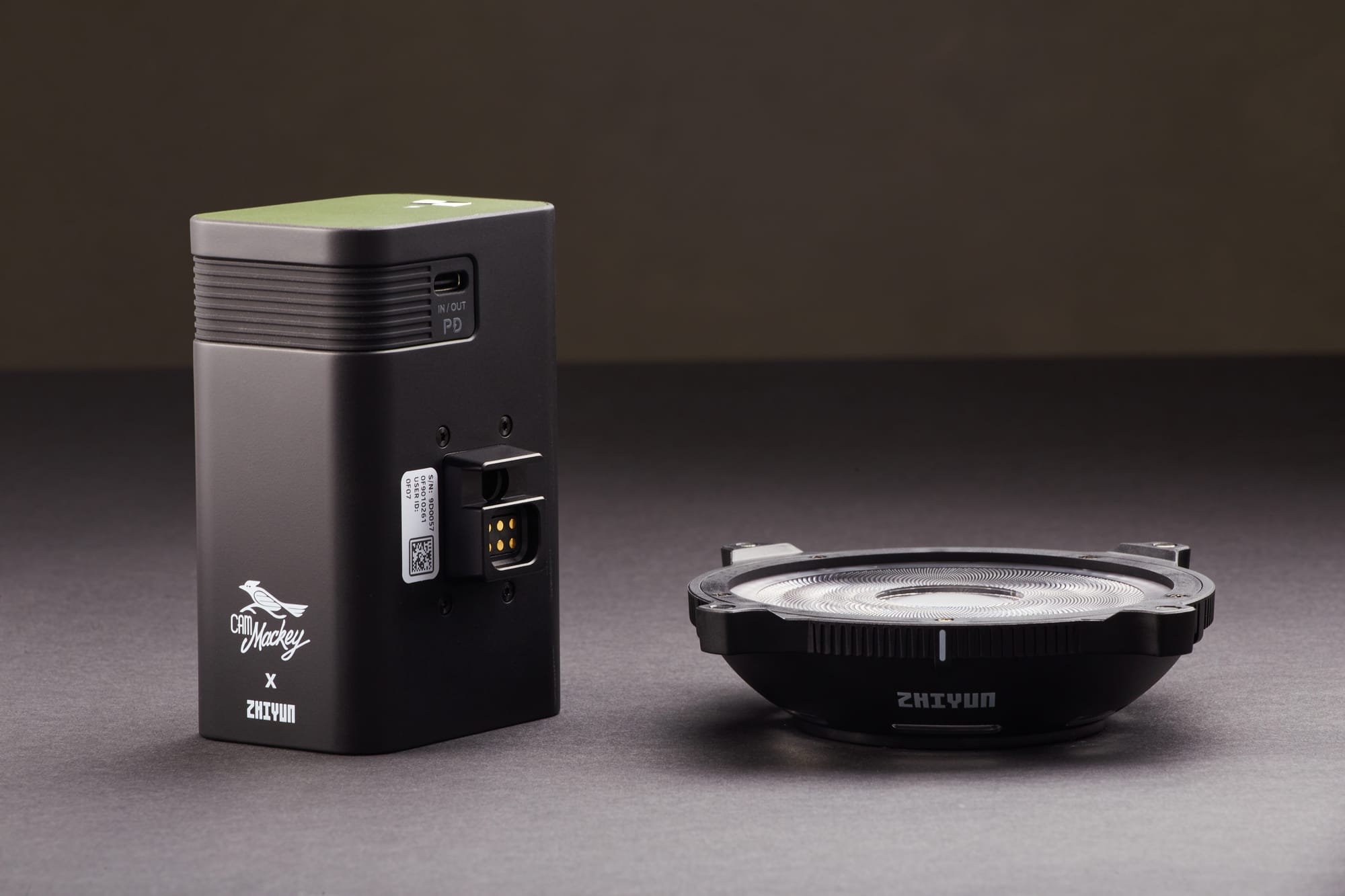
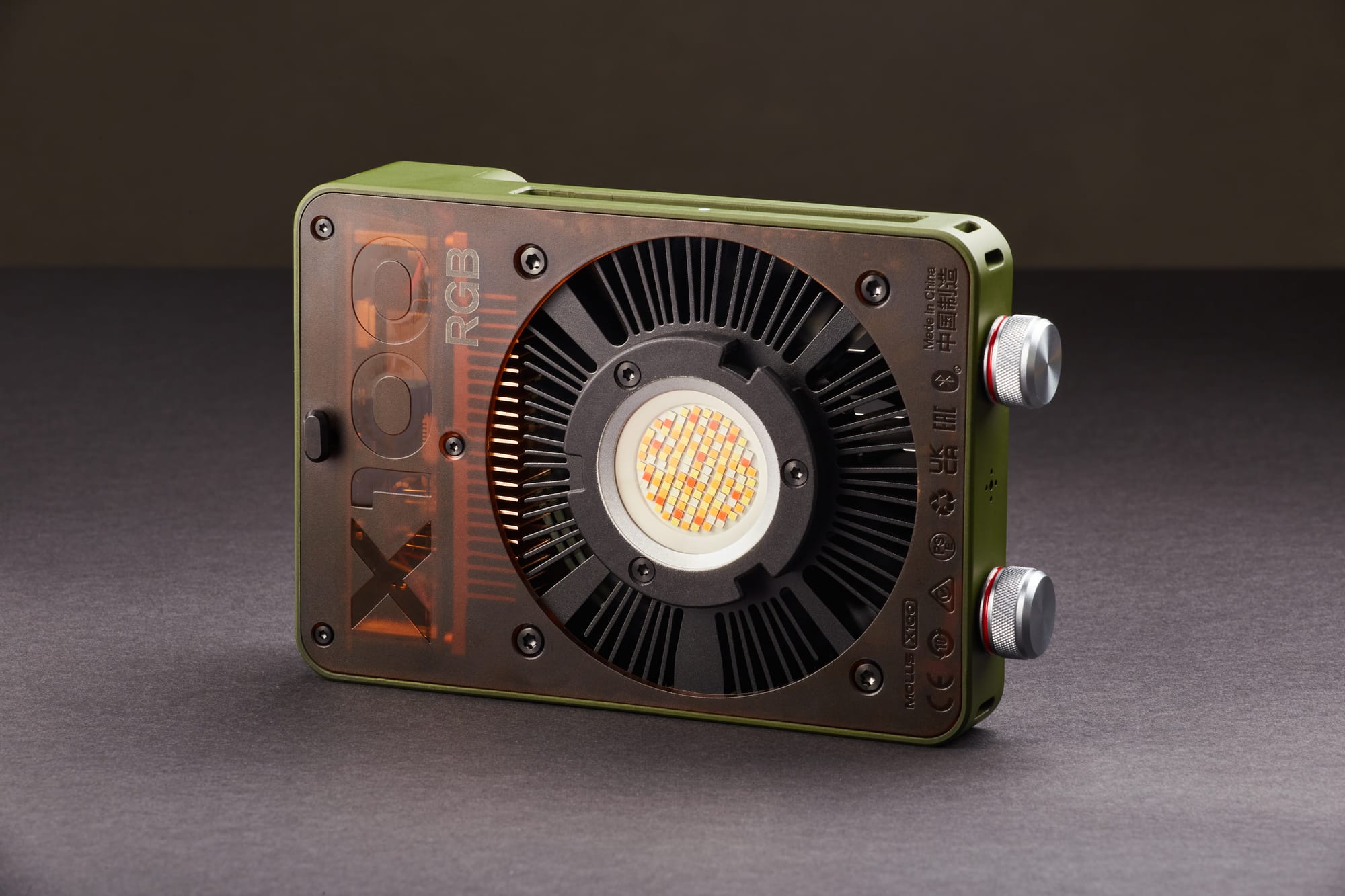
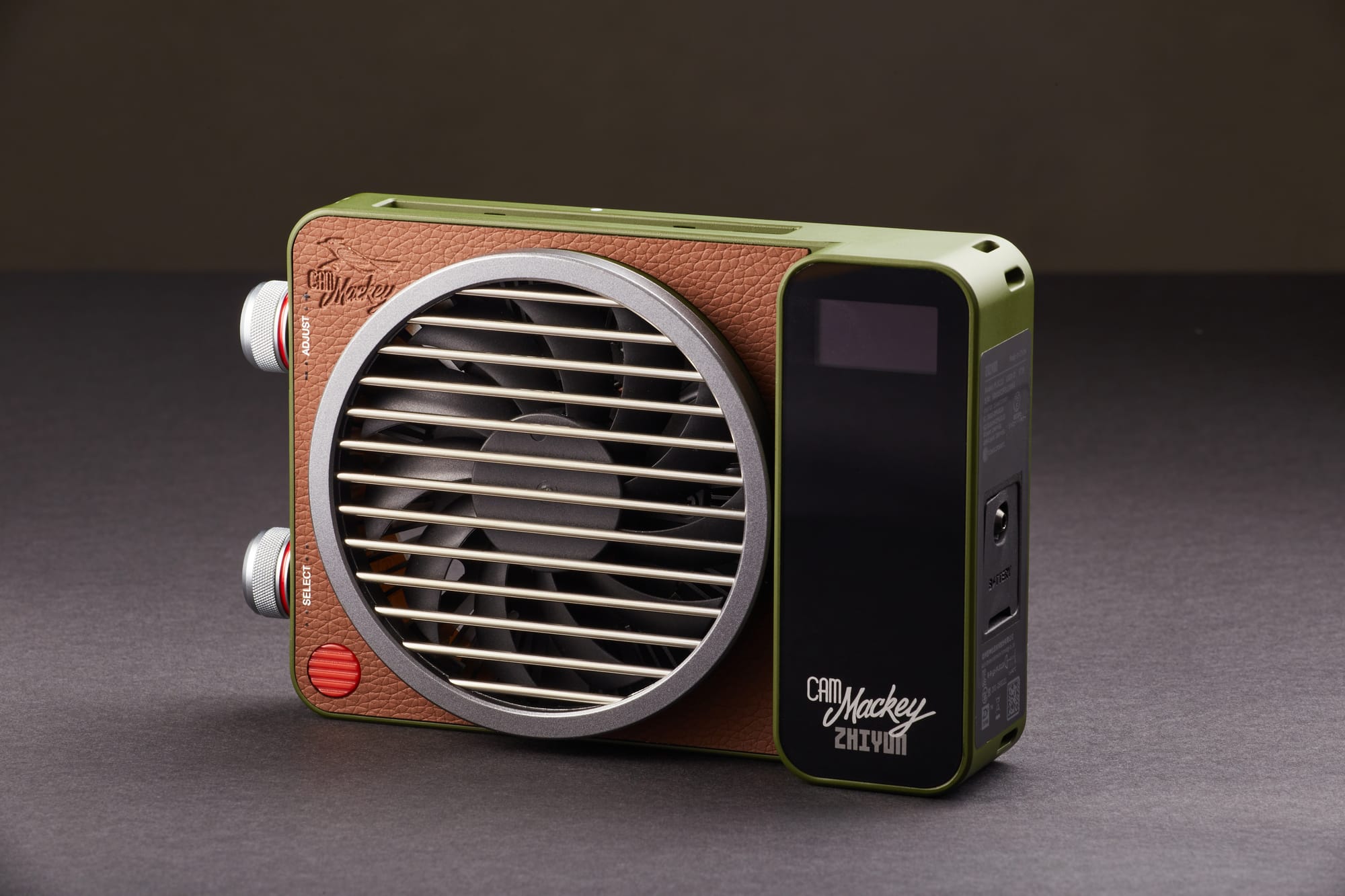
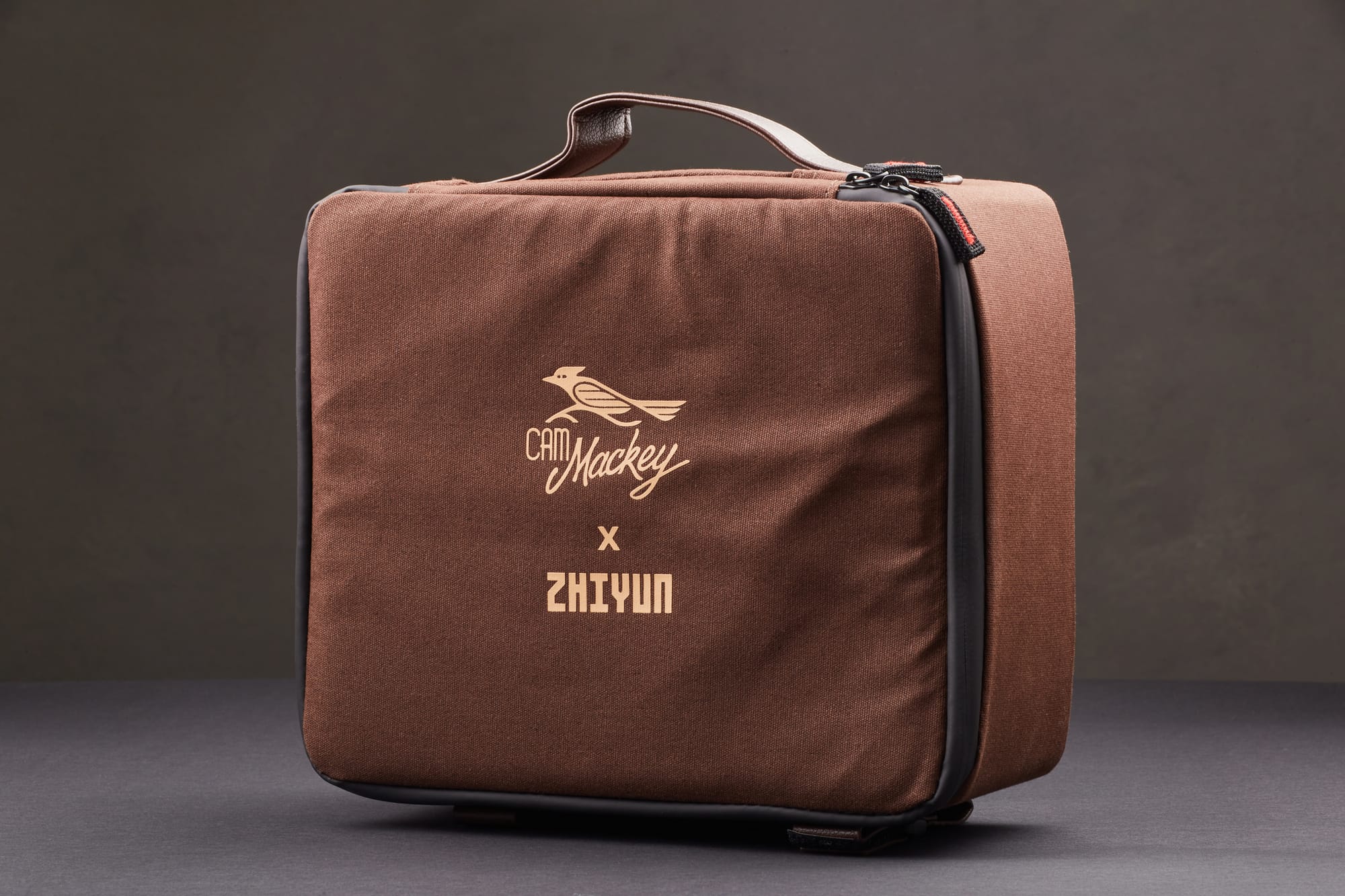
The Zhiyun Molus X100 RGB Light kit that I received includes a carrying case, external rechargeable battery, fresnel lens, barn doors, a Bowens mount adapter, and a small softbox. Amazingly, the light itself is barely larger than an iPhone, though it is a fair bit thicker and heavier. With such a tiny footprint, I can see this quickly becomes an attractive option to throw in your camera bag as part of your essential kit.
The build quality of the light is constructed to an impressively high standard, as it looks and feels like a premium piece of equipment. During my testing, the built-in fan (which is super quiet) prevented the light from ever getting close to overheating. In fact, I never once encountered an issue even when using the light at full power full for a couple of hours at a time.
The same can't be said for the external battery however, which only lasted 34 minutes when using the light at full power. As a result, I almost always kept the light plugged in directly. If you do need to shoot with an external battery, I'd recommend bringing along multiples just in case.
The user experience of any electronic device is critically important. Thankfully, the user interface on this unit has been well thought out, and I didn't need to refer to the manual to figure anything out. The two main buttons on the side of the unit are for selecting and adjusting the various modes, and they make navigating the simplified menu system a breeze.
The standout feature of the Zhiyun Molus X100 RGB Light is the ability to precisely dial in whatever color temperature your heart desires. The ease of adjusting the color to the exact shade and saturation level of your choosing cannot be overstated here, and it makes using colored gels (as I've done for years) a thing of the past. And for video shooters, there's an abundance of special motion lighting effect options available such as a police car, explosion, disco, or strobe effect, most of which are genuinely useful and not gimmicky.
In Use
While video is generally shot at higher ISOs and wide apertures (think ISO 1,000 and F2.8), and can therefore make do with lower light levels, studio photography is typically shot at low ISOs and with more narrow apertures (think ISO 100 and F11) in order to obtain maximum image quality. Naturally, this results in a much higher power output requirement from the lighting setup. Given that I'm incorporating the Zhiyun Molus X100 RGB Light into my existing studio photography workflow, I was curious to find out just how far I'd be able to push its limits.
What I quickly found, was that while it can't be used effectively as a main light with larger lighting modifiers such as a 60 inch octabank due to power limitations, it performs remarkably well as a rim light, fill light, and even a key light when used with the fresnel lens and barn doors configuration. I also noted on several occasions just how nice the quality of light is with this simple setup, which is how I ended up using it most of the time as you'll see below.

For this first image, I wanted to include the Zhiyun Molus X100 RGB Light directly into the shot, if only because it reminds me of those gorgeous old HMI lights that you'd see on Hollywood film sets from generations ago. I almost never show the actual light sources in my images, but in this case I think it looks nice enough to be used as a prop here.
The subject was lit with a studio flash equipped with a 60 inch Photek Softlighter as the main light, and I used the Zhiyun X100 RGB to create a rim light which helps to separate the subject from the background with a soft orange glow from behind.
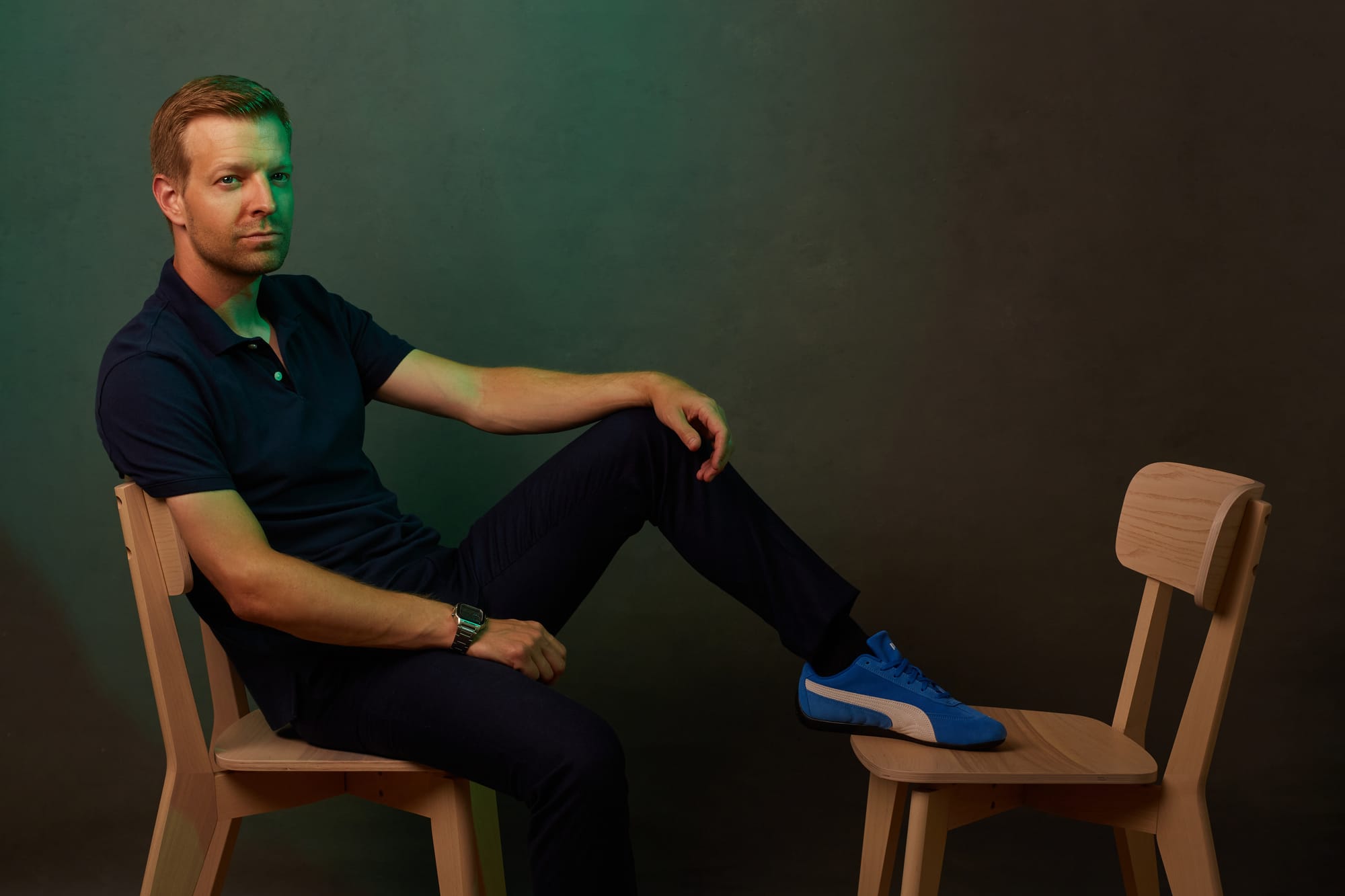
This next image was loosely inspired by Norman Jean Roy's incredible Vanity Fair spreads circa 2006-2012 where he'd tastefully incorporate cyan shadows into his studio portraits. Now to be clear, it's not lost on me that this may have been done during the post production process much of the time, but I wanted to see what I could achieve by doing it all in-camera.
Again, the main light was a studio flash with a 60 inch Photek Softlighter, and I used the Zhiyun X100 RGB with the fresnel lens / barn doors as a cyan colored fill light for the shadow side of the subject's face. I expected a much harsher result, so I was pleasantly surprised at how a bare bulb light source could fill in the shadows as gently as it did. I also like the subtle color gradation that it added to the canvas backdrop.
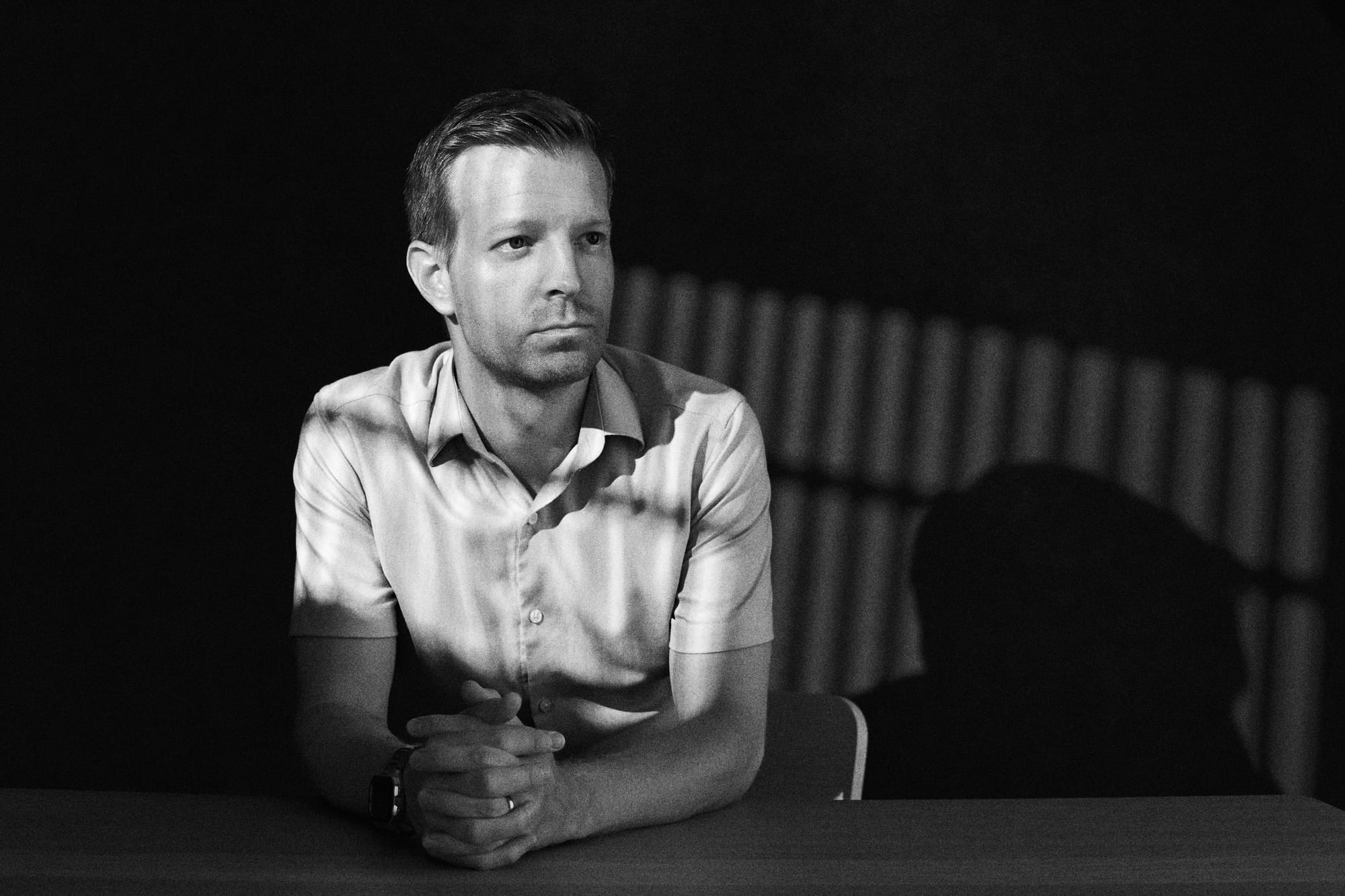
This is where I think things really start to get interesting. I've wanted to create a film noir inspired portrait for years now, but never felt like I had the tools easily accessible to me in order to pull it off. But along with the Molus X100 RGB, Zhiyun also sent me the optional Spotlight Attachment. This additional accessory is essentially a lens and gobo insert system that you can use to focus the light into interesting shapes and patterns, and with relative ease I might add.
In this case, I placed a window pattern insert into the lens and focused it onto the subject's face and background. This created a sort of "streetlight spilling into a window at night" type of look that I ended up being quite fond of. The Zhiyun light with the Spotlight Attachment was the only artificial light source in this image, however there is still some fill light in the shadows due to the surrounding white walls and diffused daylight that crept through the closed blinds in the room.
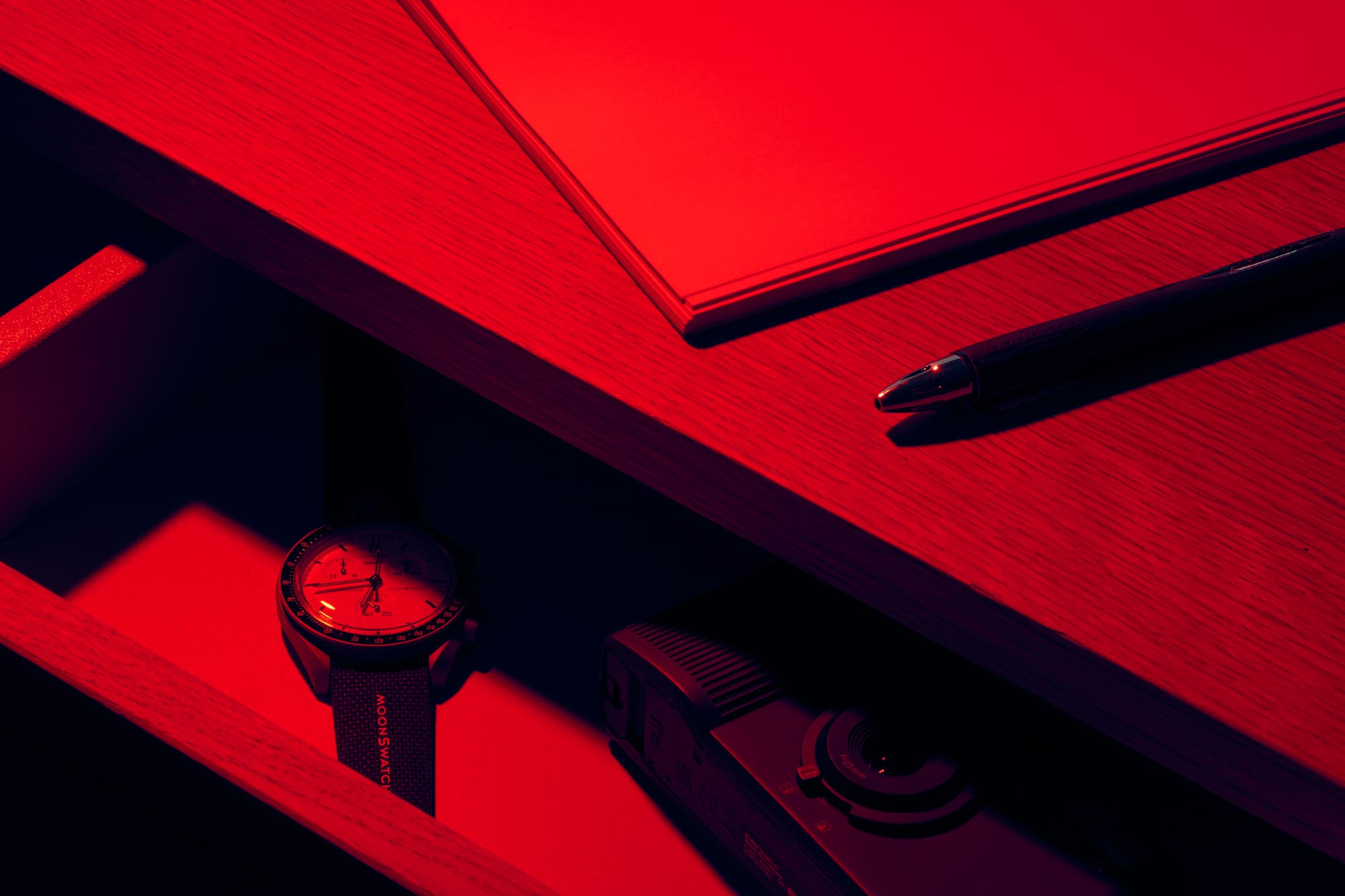
The inspiration for this image is equal parts Ralph Gibson, as well as the bold colors from the iconic Blade Runner 2049 poster. When paired together, I sought out to create a layered still life image with a sense of mystery. Using the Zhiyun X100 RGB with the fresnel and barn doors configuration as the only light source in the image, I turned the color temperature on the light to a deep red and pointed it down towards the desk. Later in Capture One, I tinted the shadows blue in order to emphasize the color palette that was influenced by the Blade Runner 2049 poster. The result is otherworldly and a bit unsettling, which is exactly what I was going for.
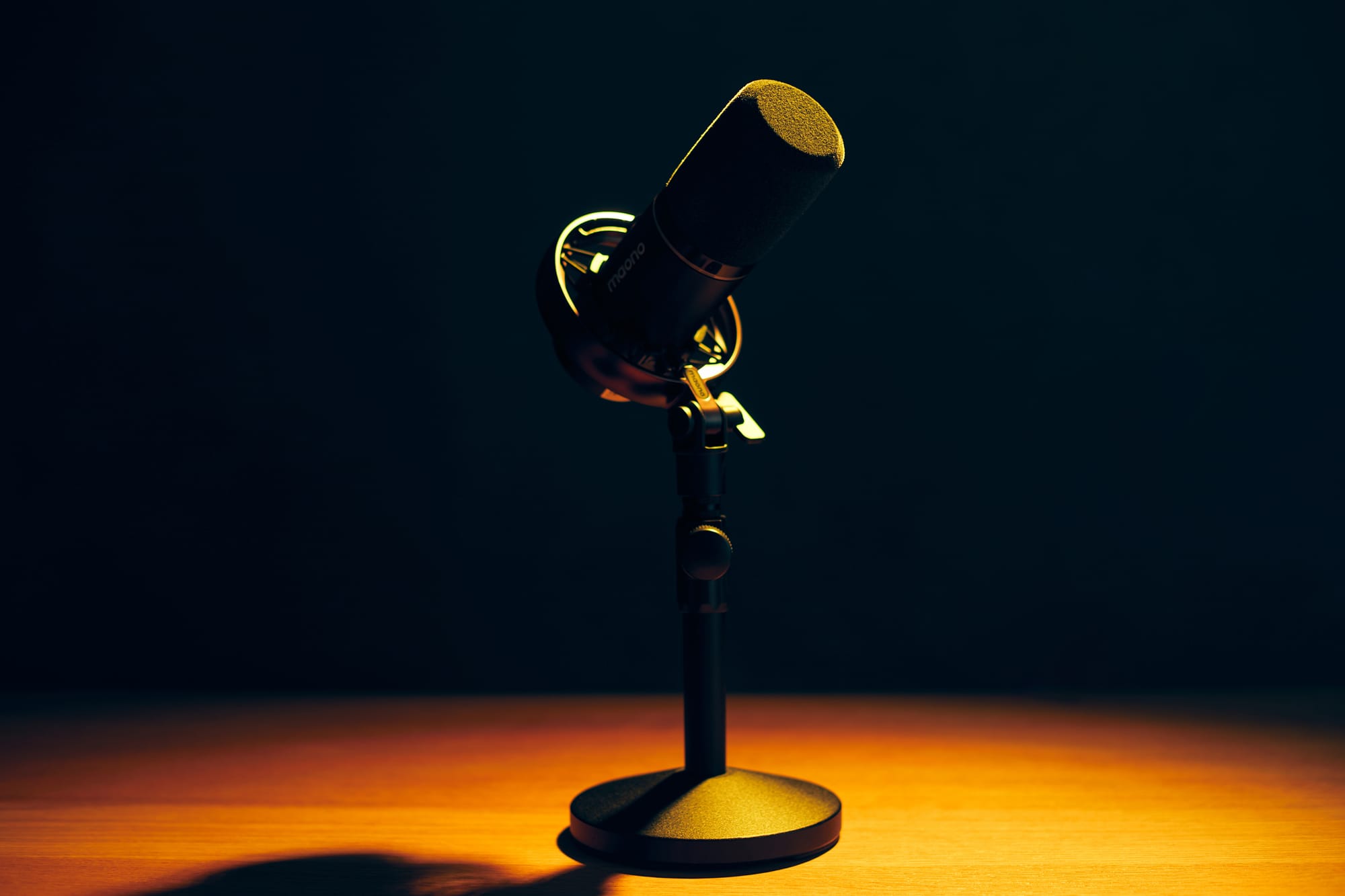
I wanted this image to evoke the feeling of approaching a stage microphone where all eyes in the audience are focused solely on you. The Zhiyun X100 RGB with the fresnel and barn doors was the only light source in the image. I backlit the microphone with a strong yellow cast in order to mimic hard stage lighting. I also tinted the shadows a slight cyan color for a bit of contrast to the intense yellow.
© Nicklaus Walter
And lastly, while this might look like a slideshow of images, it's actually video footage that I shot to test out the various motion effects that the Zhiyun X100 RGB can produce. There are also some eye-catching strobe effects available, but I'm not sure everyone reading this would appreciate its intensity.
Pros
- Robust build quality
- Small footprint and lightweight
- Menu system is intuitive
- Doesn't overheat
- Quiet operation
- Full color RGB spectrum allows you to select any color, hue, and saturation level imaginable
- The quality of light from the bare fresnel lens and barn doors is excellent
- Includes a variety of useful lighting effects for video
Cons
- External battery only lasts for 34 minutes at full power
- Light output isn't powerful enough to be used with large lighting modifiers as a main light for still photography at lower ISOs
Verdict
I freely admit that I'm normally quite methodical and formulaic with my lighting setups. I like what I like, and tend to stick with what works. But using this light has been incredibly freeing and encouraged me to push well past my comfort zone.
It does have some limitations in its applications as a primary light source for studio photography, and the external battery doesn't last as long as I'd hoped. However, I've found that the ability to dial in the exact color temperature of your choosing and the creative projection possibilities of the Spotlight Attachment more than make up for those constraints. Whether you're a photographer or a cinematographer, the Zhiyun X100 RGB Light will make it easier to tell an interesting story within the frame.